Hire a full-stack developer?

Full-stack means the same developer builds the screen as well as the server, the database and the integrations, so a feature is finished in one pass rather than split across two teams. We deliver in small senior teams, so a feature rarely passes through more hands than it needs to. Our team includes 2 specialists in this area.

Build your software

Have custom software or a web application built by senior developers. From concept to scalable production, or your AI-generated software made production-ready. Free scoping call up front.

Meet our Full Stack experts

2 specialists on our team specialise in this. Below you can see who they are, along with the other technologies they know.

Frequently Asked Questions

What does a full-stack developer do?

A full-stack developer builds both the side of an application you see and the side you do not: the screen in the browser or app, the server and API behind it, the database and the connections to other systems. The gain is the handover that disappears: a feature does not travel from a frontend team to a backend team and back, so no week is lost agreeing who changes what. It does not mean someone is equally deep in everything; a good full-stack developer also knows when a question belongs with a specialist.

What does it cost to hire a full-stack developer?

A senior full-stack developer in the Netherlands charges roughly 70 to 125 euro per hour excluding VAT. Where it makes a difference on the bill is the hours you do not pay for: where two specialists each build half a feature and then work out together why the halves do not fit, one full-stack developer builds it in one go. For large systems with heavy traffic or complex data a specialist next to the full-stack developer pays off, and we say so up front.

A full-stack developer, or a frontend and a backend specialist?

For a new product, an MVP or an internal tool, a full-stack developer is usually the fastest route: one person oversees the whole feature and nobody waits on anyone. Specialists pay off once one side gets heavy enough to keep someone busy full time, for example an interface with a lot of interaction or a backend that processes large amounts of data. That is why many teams start full-stack and only add a specialist later, at the spot where it pinches.

Which stack do you work in?

Usually React with TypeScript on the front and Go or Python on the back, with PostgreSQL as the database. Python when data or AI is involved, Go for services that have to handle a lot at once. If your frontend is already TypeScript, Node.js can be the backend, so both sides share one language and the same types. An existing stack we take over as it is: we do not rewrite what works.

How does 010 Coding Collective work full-stack?

You work directly with the developer who builds the feature from screen to database, with no account manager in between. Our process runs entirely on AI, with a human checking every line before it goes live, and on full-stack work that check earns its keep: a model happily adjusts the screen and forgets the check on the server, so the form looks right and lets everything through. We are a small senior studio at Hofplein in Rotterdam, so you can drop by and watch what is being built at the table.

Let's discuss your project

From AI prototypes that need to be production-ready to strategic advice, code audits, or ongoing development support. We're happy to think along about the best approach, no strings attached.
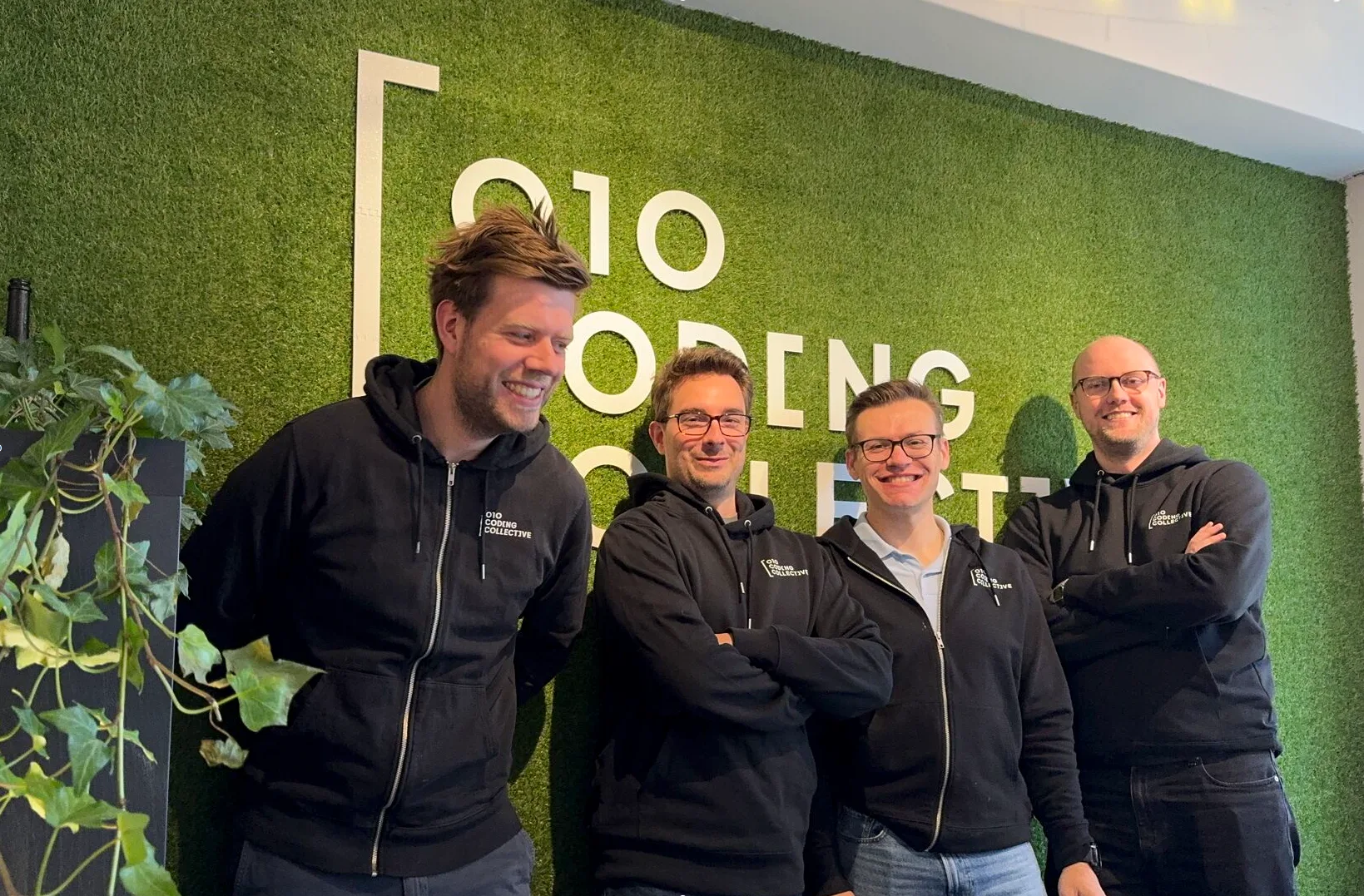
010 Coding Collective free consultation
free

Free Consultation

In 1.5 hours we discuss your project, challenges and goals. Honest advice from senior developers, no sales pitch.

1.5 hours with senior developer(s)
Analysis of your current situation
Written summary afterwards
Concrete next steps